
How Arrest Warrants Work in Tattnall County
An arrest warrant is judicial process. It gives officers legal authority to take someone into custody. Georgia requires sworn information from an officer or other authorized applicant, and a judge or magistrate then decides whether probable cause exists. That standard means a legal basis to believe an offense occurred and that the named person was involved. Once the judge signs, the warrant moves to the proper agency for service. The Tattnall County Sheriff's Office executes county process, runs jail intake, and serves papers across Tattnall County, including inside municipalities. City police handle city process, and county, state, or federal officers may act when a case crosses borders.
Process comes before judgment.
An arrest warrant begins a custody and court sequence. The accused person retains the right to court process and a defense.
Tattnall Probable-Cause Path
In Tattnall County, the process begins with sworn facts, not an online list. An officer, investigator, or other authorized person supplies the information, and a judicial officer reviews it under Georgia law. When probable cause is found, the warrant that follows names the person and charge and commands an arrest on its stated terms.
- Sworn facts or qualifying personal knowledge reach an authorized judge.
- The judge evaluates probable cause and applicable application rules.
- The warrant identifies the subject, alleged offense, and command.
- The court or agency routes it to the sheriff, city police, or another authorized office.
- Execution leads to booking, first appearance, and a bond decision when applicable.
- A service return and later docket entries record what happened.
The affidavit or an unserved Tattnall County warrant may be sealed or restricted. A search that turns up nothing does not undo the court's order.
Arrest Warrants: What They Contain
A full arrest-warrant file often holds more than the public Tattnall County custody interface shows. The booking screen may list warrant number, statute, description, court, arresting agency, bond, and status. The clerk may hold further public entries. Sealed material stays out of reach.
| Warrant type and number | The kind of process and its court or agency identifier. |
|---|---|
| Issuing court | The judge or court with authority over the application. |
| Probable-cause reference | The complaint or affidavit, subject to access limits. |
| Charge and statute | The alleged offense, not a conviction. |
| Service return | How and when the warrant was executed or returned. |
| Bond and appearance | The current order and next required court event. |
| Disposition | Later recall, dismissal, or case action shown by the docket. |
Use subject details like name and physical description only to confirm identity in a Tattnall County warrant check. Do not republish them as a roster.
Tattnall Arrest-Warrant Authority
Superior Court holds broad felony trial authority in Tattnall County. State Court covers misdemeanors, traffic, preliminary hearings, and its own warrants. The Chief Magistrate Court lists arrest warrants, search warrants, and preliminary hearings among its functions. Municipal courts take city traffic, ordinance, and preliminary criminal matters.
| Office | Warrant role | Public contact |
|---|---|---|
| Superior or State Court | Issues and maintains process within its case authority | Clerk, 912-557-6716 |
| Magistrate Court | Arrest/search warrant and preliminary process | 912-557-4372 |
| Municipal Court | City process within statutory authority | Issuing city clerk |
| Sheriff | Execution, intake, and service status | 912-557-6777/6778 |
In Tattnall County, the issuing court controls docket facts, while the serving agency keeps execution records; when status is unclear, contact both.
How Warrants Get Served in Tattnall County
Tattnall County deputies execute county warrants, book people who are arrested, guard courtrooms, and serve process. Glennville Police Department and Reidsville Police Department handle city law enforcement and may serve papers within their roles. When a warrant comes from another county, agencies have to coordinate. A January 15, 2026 GBI release described one such action in Collins, tied to an out-of-county warrant at a sheriff's request, which shows how agencies work across county lines. It is not a searchable Tattnall warrant record, and person-level details should not be republished as a local roster. Federal warrants sit in a separate system. Tattnall County falls in the Southern District of Georgia's Statesboro Division. PACER may show a federal docket, though sealed or unserved material can stay hidden.
Tattnall Service and Return Terms
A few plain terms help you read a Tattnall County warrant record without treating each entry as the final result. Confirm every term on the current court docket.
- Issued
- The judge signed or authorized the warrant.
- Active
- The responsible office reports it remains open.
- Served
- An authorized officer executed the command.
- Return
- The officer's record of execution or other handling sent to court.
- Booked
- The person entered custody processing after arrest.
- Recalled
- The issuing court withdrew the warrant.
A released booking status in Tattnall County means the person left custody. It does not by itself say how each charge or warrant ended.
Arrest Warrants, Summonses, and Bench Warrants
These kinds of process do different jobs. An arrest warrant allows custody after a probable-cause finding, while a summons tells a person to appear without an order to arrest. A bench warrant usually follows a missed duty in a Tattnall County case.
| Process | How it begins | Immediate meaning |
|---|---|---|
| Arrest warrant | Sworn facts and probable cause | Authorizes arrest |
| Summons | Court-issued notice or charging process | Commands appearance |
| Bench warrant | Missed setting or unmet court order | Authorizes custody on the existing case |
| Search warrant | Probable cause tied to a place, thing, or record | Authorizes a defined search |
The label matters because next steps differ. Ask the Tattnall County clerk for the exact docket term rather than guessing from an old notice.
Confirming a Tattnall Arrest Warrant
Call the sheriff at an official number and ask how to check a possible warrant for yourself. Keep a full name, date of birth, any case or incident date, city, and agency handy. Skip sending sensitive details through an unverified channel. Then contact the Clerk of Superior Court for Superior or State docket routing, or Chief Magistrate for its process. Municipal matters belong with the city clerk. Georgia warns that showing up in person can lead to immediate arrest while a warrant is active, so learn the Tattnall County procedure and consider counsel first.
Custody data is only a cross-check.
The inmate inquiry reflects booking records. A missing name does not prove there is no unserved arrest warrant.
Tattnall Arrest-Record Access Limits
The Tattnall County open-records page gives access to public records unless an exemption applies. A narrow request works best: name the agency, date range, case number, and the specific record you want. Ask for a cost estimate and the statutory basis for any withholding or redaction. Georgia's general baseline is three business days when records are readily available, though an agency may quote more time and cost for heavier work. Search, retrieval, redaction, and copying fees can apply. A pending criminal case may call for formal discovery instead. Sealed arrest-warrant applications, unserved process, investigative files, and juvenile records in Tattnall County can stay restricted, and one public booking record does not waive those limits.
Handling an Arrest Warrant in Your Name
So a Tattnall County arrest warrant carries your name. First move: call a licensed lawyer. Ask the issuing court and the sheriff what steps they require, since court orders control bond, surrender, and appearance. Don't dodge service, confront officers, or think a fee clears it, because it doesn't. Only the issuing court can recall or quash the warrant.
- Verify identity, number, court, charge, and active status.
- Ask counsel about the case and any lawful motion or surrender option.
- Ask the sheriff where and when surrender occurs if it is required.
- Confirm whether bond is set, denied, or not yet set by the court.
- Attend first appearance and every later date.
- Keep bond receipts, orders, and docket proof of any later recall or disposition.
The Tattnall County warrant records overview lays out the full sequence from lookup to resolution. The issuing court, plus the agency holding the warrant, gives the final word on status.
Tattnall Arrest Warrant Authority Sources
The Tattnall County sheriff's constitutional role covers executing arrest warrants and serving court papers. See the sheriff's official duty page.
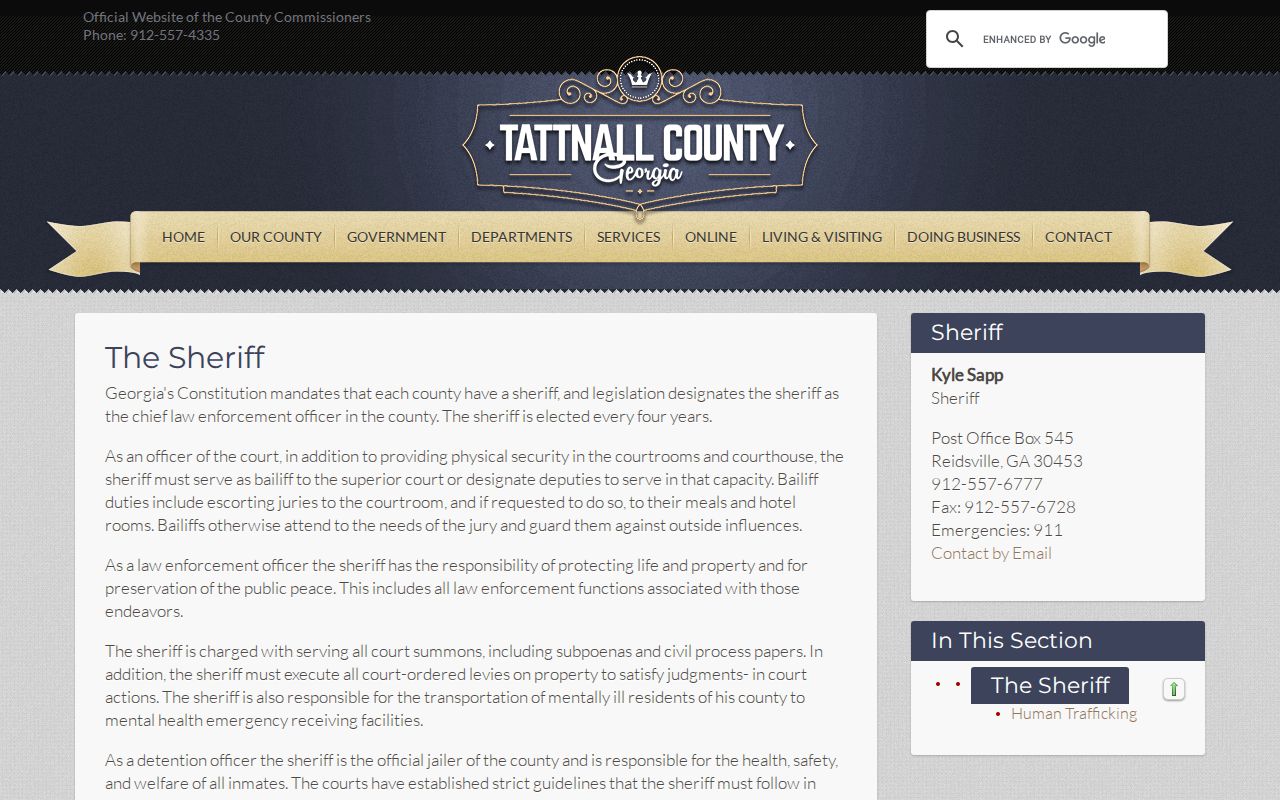
In Tattnall County, the sheriff's office serves warrants once a judge signs them. The issuing court keeps control of the case itself. Georgia Courts lays out how Superior, State, Magistrate, and Municipal Courts fit together, and the official court hierarchy source shows that structure.
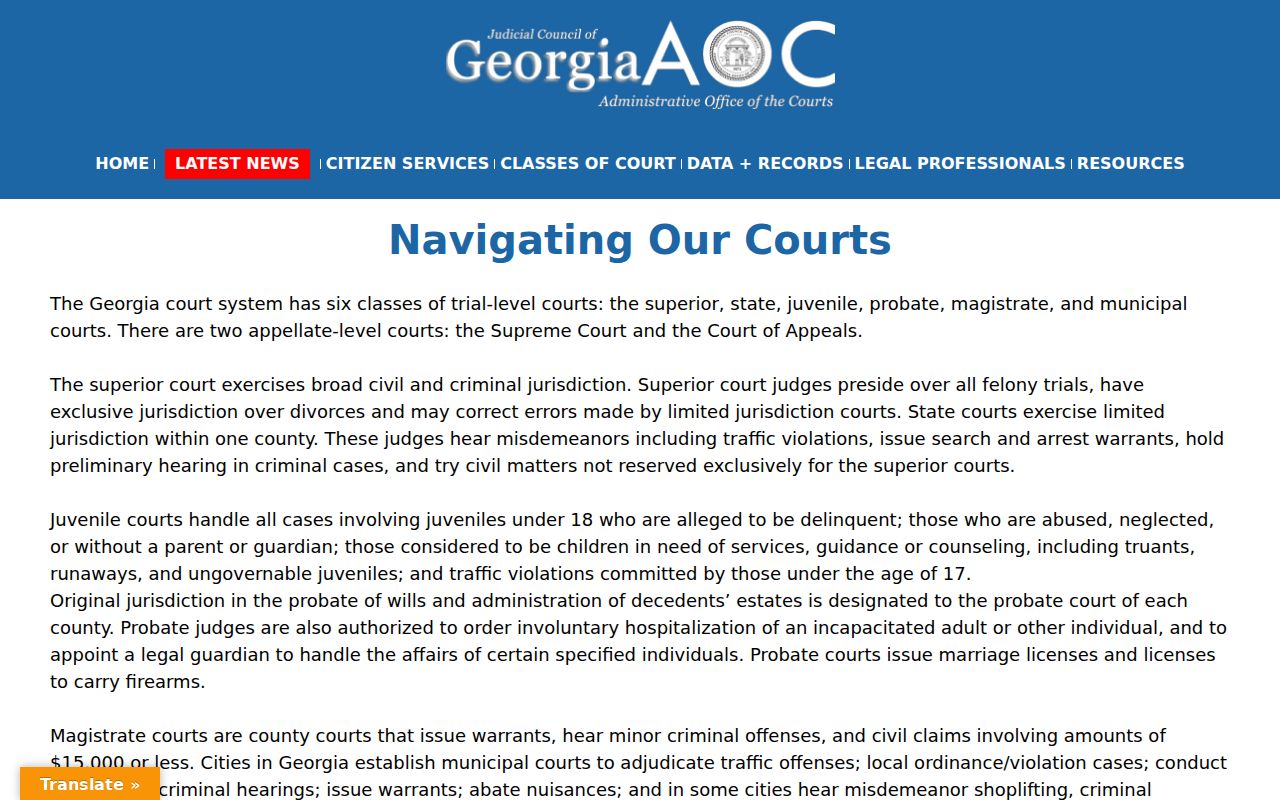
That division of authority determines which clerk can confirm a warrant-related docket.